
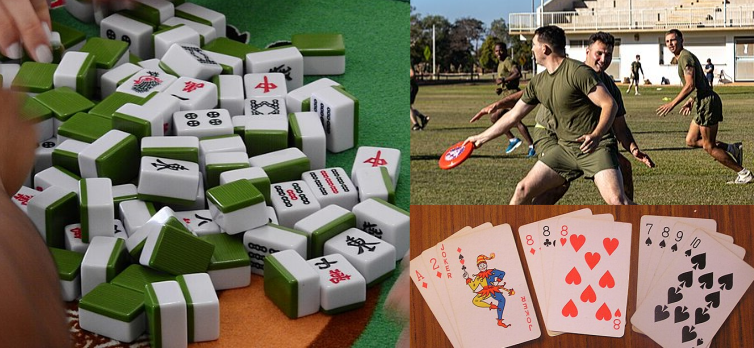
When I set out to design Flex Mahjong, my goal was simple: create a streamlined version of American Mahjong that new players can jump into right away. I wanted to keep the fun, distinctive elements of American play without relying on the annual card or a long list of rules. To do that, I blended selected features from traditional Asian styles with core concepts from American Mah Jongg, then added my own innovations aimed at simplifying and speeding up the game. The result is American Flex Mahjong, a game that’s easy for beginners to learn and appealing for experienced players who are curious about American Mah Jongg but hesitant about its steep learning curve.
Below is a breakdown of the influences behind American Flex Mahjong’s rules. I am not an expert on all variants of Mahjong, so many of the aspects I outline below may be found in other variations. These are just the sources I used when coming up with Flex Mahjong because they are the games I play.
Standard American Mah Jongg
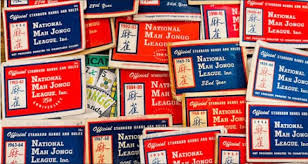
I consider American Flex Mahjong to be a variant of American Mah Jongg because it keeps so many of the core elements of what differentiates American style from other versions of Mahjong. Here’s a list of the Flex Mahjong rules that come directly from standard American Mah Jongg:
- Sets larger than three tiles, unlike most Asian styles where a 4-tile Kong set is essentially a special 3-tile set when it comes to the pattern of sets in the hand.
- Sequences of numbers across the hand which echo the standard categories from annual cards.
- Flowers remaining playable in winning hands.
- Jokers and Blanks used to both take the place of tiles or swap for other tiles.
- Tile passing at the start of each round.
- Optional house rules letting players incorporate any rules from Standard American Mah Jongg they want that still work with the gameplay of Flex Mahjong.
MAHJ-X™ Variant Rules
In an attempt to reduce the element of luck and increase strategic opportunities in American Mah Jongg, a team of innovative Mah Jongg enthusiasts created an alternative rule system called MAHJ-X™. These rules amend some existing Standard American Mah Jongg to create a unique and challenging gameplay experience. Flex Mahjong incorporates two of these innovative rules:
- East does not start with an extra tile, making the opening exchange of tiles more fair, and making the game easier to teach by reinforcing the turn order of “draw one tile then discard one tile” from the start.
- “Reverse” Joker Swaps allowing players to swap a Joker in their hand with any exposed tile.

Check out the MAHJ-X™ website for more details on this amazing innovation in American Mah Jongg.
Asian Mahjong Styles
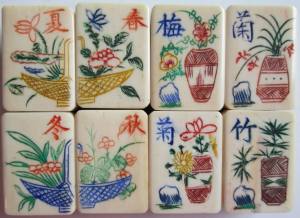
The two Asian Mahjong styles I play most often are Hong Kong Style and Sichuan Bloody Rules. With relatively uncomplicated rulesets and scoring, these two variants suit my taste as a more casual player. I wanted Flex Mahjong to feel similar to these variants while keeping unique elements of American Mah Jongg gameplay. Here’s what I included from those two versions in this game:
Hong Kong Mahjong:
- Adding points for different scoring criteria based on how you build the hand, for example adding points for 7 pairs or all one suit, or adding points by how you win such as self-picking the winning tile or winning with the final drawn or discarded tile.
- Variable minimum scores letting groups tune the difficulty for casual or advanced play
Sichuan Bloody Rules Mahjong:
- Using a limited amount of tiles for a fast gameplay experience.
- Limiting hands to only two suits, increasing the strategic challenge where otherwise it could be easy to form winning hands.
- A single pass of 3 tiles, which brings the tile exchange element to the game but keeps it streamlined and simple.
Rummy Card Games
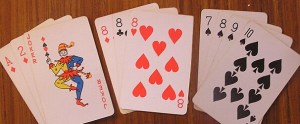
Wanting to push the idea of streamlined casual gameplay even further, I looked to the easy-going logic of rummy card games for inspiration. Flex Mahjong employs a few rules you will recognize if you are a player of Gin Rummy or Rummy 500:
- No predetermined patterns of sets for a winning hand. Instead sets can be of any length, for example a run meld can be 10 cards long.
- The Dragon tile being either 0 or 10 is inspired by Rummy rules where the Ace can be a 1 or the high card after the King. This rule is unique to Flex Mahjong.
- Streamlined memorable rules that emphasize quick learning and casual play over complexity.
- Acceptance of a wide variety of house rules and variations of gameplay.
New Innovations in Flex Mahjong
American Flex Mahjong isn’t just a mashup of existing games. In order to play American style without using a card or book of approved winning hands, I needed to come up with a system for creating winning hands that was simple enough to be understood and memorized quickly, while providing enough limitation to make winning hands challenging to build. The Four S Rules of a winning Mahjong Hand system is the unique feature of Flex Mahjong that gives you the freedom to play American Mah Jongg without a card.
In addition to the Four S Rules, a number of rules were created to make the make the game more streamlined, more flexible, and easier to learn. These innovations include:
- “Messy” shuffling and dealing as a default instead of building walls, making setup fast and simple.
- Modular rules for special tiles giving you the freedom to use any Mahjong set you have regardless of which tiles are included.
- Blank Swaps are formalized and performed openly on your turn, similar to a standard Joker Swap.
Ultimate Frisbee’s “Spirit of the Game”

What does Ultimate Frisbee have to do with Mahjong? Well, one of the aspects of Standard American Mah Jongg that I don’t enjoy is the long list of mistakes a player can make which can cause their hand to be called “dead”, making them stop playing for the round. Not only can these rules be very fiddly and easy to fight over, they add a cutthroat element to the game that can cause bad feelings in a group. Everyone wants to win, but the idea that you can be kicked out of a round because you accidentally draw a tile from the wrong side of a wall doesn’t sit right with me. Plus, new players don’t want to memorize a list of a dozen ways they need to avoid messing up.
Flex Mahjong takes the approach that mistakes should just be corrected and play moves on. I am inspired by the Spirit of the Game rule in Ultimate Frisbee, where there is no referee and players govern fair play themselves. The idea is to play by the rules out of respect for your fellow players while having fun. As a fundamentally casual and friendly game, the spirit of Flex Mahjong is friendly competition and prioritizing fun.
A Modern, Flexible Way to Play
By weaving these influences together, I hope that American Flex Mahjong creates an experience that’s fresh yet familiar, strategic yet accessible, and flexible enough to suit beginners and seasoned players alike. If you’re looking for a version of Mahjong that’s easy to learn but endlessly playable, I designed Flex Mahjong for you.
 Flex Mahjong
Leave a comment